Scientists at the Fraunhofer Institute for Photonic Microsystems IPMS have developed an innovative 2K OLED microdisplay. They will present initial results at SID Display Week 2026 in Los Angeles, USA, from May 5–7, 2026, at Booth 1146.
more info
Scientists at the Fraunhofer Institute for Photonic Microsystems IPMS have developed an innovative 2K OLED microdisplay. They will present initial results at SID Display Week 2026 in Los Angeles, USA, from May 5–7, 2026, at Booth 1146.
more info
Fraunhofer IPMS is introducing a new technology called Li-Fi Grathus®, which transmits data via light instead of cable or radio waves. The system delivers gigabit-speed performance and can send and receive data simultaneously. It operates reliably and with near-zero latency, even in environments where traditional wireless systems reach their limits. Thus, Li-Fi Grathus® enables flexible, reliable, and truly real-time industrial communication.
more info
In April, ‘SPINS’ (Semiconductor Pilot line for Industrial Quantum NanoSystems) was launched, one of the 6 European quantum pilot lines. Coordinated by imec, the consortium brings together 25 European RTOs, industry partners, and academic research groups to strengthen Europe’s leadership and sovereignty in this strategically important domain. The €50 million SPINS pilot line project has been made possible through the co‑funding support from the European Union’s Chips Joint Undertaking (Chips JU) and the national and regional authorities of the participating Member States. Fraunhofer IPMS plays a central role within SPINS in the high-resolution structuring of qubit and processor elements.
more info
Fraunhofer Institute for Photonic Microsystems IPMS, together with the Helmholtz Centre for Environmental Research (UFZ) and the Center for Applied Research and Technology e.V. (ZAFT), is launching the FastSense research project – Innovative sensor technology and AI for environmental and hazardous substance monitoring. The project aims to develop a portable, fast measurement system combining state-of-the-art sensor technologies and artificial intelligence to set new standards for the early detection of pollutants and environmental influences.
more info
CEA-Leti and Fraunhofer IPMS have successfully completed the first exchange of ferroelectric memory wafers within the FAMES Pilot Line, marking a pivotal milestone in establishing a shared European platform for advanced embedded non-volatile memory technologies. Launched in December 2023 and coordinated by CEA-Leti, the five-year initiative has demonstrated the viability of circulating complex material stacks across some of its leading research fabs.
more info
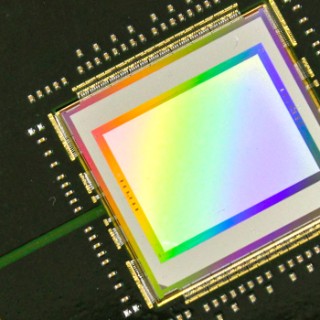
Within the projects MultiLASE (Funding Code 01QE2136C) and UltraLASE (Funding Code 01QE2309C), funded by the Federal Ministry for Research, Technology and Space BMFTR under the Eurostars program, scientists from the Fraunhofer Institute for Photonic Microsystems IPMS, in collaboration with the Danish company Norlase ApS, have developed a compact laser scan module specifically designed for the requirements of highly compact pattern-scanning laser systems for treating eye diseases. The MEMS scan module will be exhibited for the first time at TOUCH Taiwan, from April 8-10, 2026, at booth No. M501.
more info
The Fraunhofer Institute for Photonic Microsystems IPMS has launched the publicly funded SMut project, in collaboration with its partners Credoxys and SweepMe! to develop an innovative measurement system for precise thin-film characterization. This system will enable experiments to be conducted under variable conditions, setting new standards in the characterization of organic materials.
more info
The Federal Ministry of Research, Technology, and Space (BMFTR) has approved €15 million in funding for the AI-DISCO project – Edge/Cloud AI for Distributed Sensing & Computing. AI-DISCO is the first module of the R+I Factory (Research and Innovation Factory AI & Microelectronics), a nationwide novel, modular research and innovation structure at the interface of artificial intelligence and microelectronics. The consortium leader is the IHP – Leibniz Institute for Innovative Microelectronics. Fraunhofer IPMS contributes its expertise in AI-based sensor technology and edge computing.
more info
The Fraunhofer Institute for Photonic Microsystems IPMS is expanding its analytical capabilities in the field of wafer contamination. In a dedicated laboratory, the established method of vapor phase decomposition is used in combination with inductively coupled plasma mass spectrometry (VPD-ICP-MS). This combination enables precise monitoring of wafer surface contamination.
more info
The Fraunhofer Institute for Photonic Microsystems IPMS is working with the Korean TSN Lab on new real-time solutions as part of the “Global Cooperative R&D” funding program. The aim is to develop a next generation of 10Base-T1S IP cores for automotive and industrial communication applications in order to address the growing demand for scalable and cost-efficient network infrastructures. The funding program is organized by the Korean Ministry of SMEs and Startups (MSS) and supported by the Korea Technology and Information Promotion Agency for SMEs (TIPA).
more info